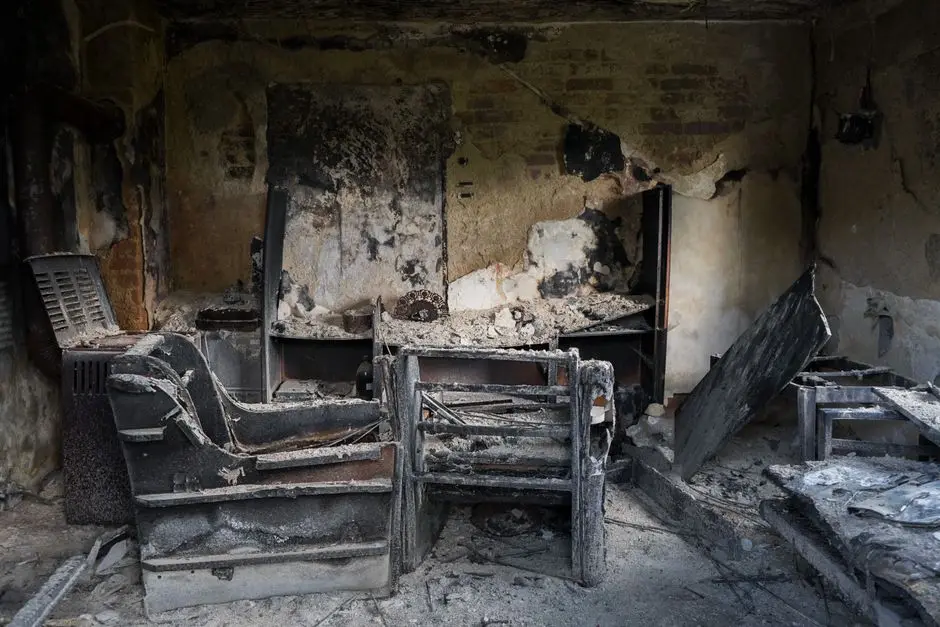
Your house still smells like smoke weeks after a fire because the odor isn't coming from the air - it's soaked into porous materials like drywall, insulation, wood framing, upholstery, and HVAC ductwork. Every time temperature or humidity changes, those materials release another wave of smoke compounds back into your living space. In NORTH HILLS, where summer heat and winter Santa Ana winds push air through every gap in a house, that off-gassing cycle can keep going for months if the source isn't physically removed. This post explains exactly where the smell hides, why airing out the house and spraying air freshener won't fix it, and what professional smoke odor removal actually does.
Why does my house still smell like smoke weeks after a fire in NORTH HILLS California
Smoke odor persists after a fire in NORTH HILLS California because the combustion byproducts - soot, ash, and volatile organic compounds (VOCs) - have bonded to surfaces and penetrated porous materials that ordinary cleaning can't reach. A typical house fire produces hundreds of chemical compounds, and the ones that smell worst are often the ones that stick longest: phenols from burned wood, acrolein from fats and plastics, and charred proteins from kitchen fires. These molecules are microscopic - often under 0.1 microns - which means they travel with air currents into wall cavities, attic insulation, and ductwork, then settle into materials that act like sponges. Once they're embedded, no amount of open windows will pull them out. The smell only goes away when the source material is either cleaned at a molecular level or removed entirely.
The science behind lingering smoke odor after fire
Lingering smoke odor after fire in NORTH HILLS California is a chemistry problem, not a ventilation problem. When wood, drywall paper, insulation, and synthetic fabrics burn, they release particles that are small enough to pass through standard filters but large enough to lodge in the microscopic pores of building materials. Those particles continue to off-gas VOCs for weeks or months, especially when the indoor temperature rises above 75°F or humidity climbs. In NORTH HILLS, where summer afternoons regularly hit the mid-90s, a closed-up house becomes a slow oven that bakes those compounds back into the air. That's why the smell seems to disappear for a day or two and then return stronger than before - you're not imagining it, and it isn't coming from the air outside.
There's also a biological component. Your nose adapts to constant odors within about 15 minutes, which is why you may stop noticing the smell while guests immediately comment on it. The compounds are still there. A professional odor inspection uses calibrated instruments and trained noses to find the actual source zones, not just the rooms where the smell is strongest.
Where smoke smell hides in your NORTH HILLS home
Smoke smell in walls after fire in NORTH HILLS California is one of the most common complaints we hear, and it's rarely confined to the room where the fire started. Smoke travels through every opening in a house - electrical outlets, plumbing penetrations, recessed light fixtures, attic hatches, and HVAC returns - and deposits residue along the way. Here are the places we find odor sources most often:
- Wall cavities and insulation: Fiberglass batt insulation traps smoke particles like a filter. Once contaminated, it has to be removed and replaced - cleaning it in place doesn't work.
- HVAC ductwork and air handler: The blower pulls smoke into the duct system during the fire and distributes it to every room. Ducts that aren't cleaned will recontaminate the whole house within days of turning the system back on.
- Attic spaces: Heat rises, and so does smoke. Attic insulation, roof sheathing, and wood framing absorb odor compounds that slowly migrate down into living areas.
- Upholstery, mattresses, and carpet padding: Soft goods are the hardest to save. Foam padding and mattress cores hold smoke deep inside and often need replacement.
- Cabinet interiors and drawers: Kitchen fires push smoke into every cabinet, and the particleboard and plywood used in most cabinets is highly porous.
- Electrical outlets and switch plates: Smoke deposits behind the plates and inside the boxes, which is why some rooms smell worse near exterior walls.
If your home is in an older neighborhood - say, the mid-century tract homes around Fire Damage Restoration in North Hills West - you likely have original plaster walls and older ductwork that trap odor more aggressively than modern construction. Plaster is denser than drywall but cracks over time, and those hairline cracks become channels for smoke particles.
How to get rid of smoke smell in house NORTH HILLS CA
How to get rid of smoke smell in house NORTH HILLS CA starts with understanding that surface cleaning alone won't work. The process that actually eliminates odor has four stages, and skipping any one of them usually means the smell comes back within a few weeks.
1. Source removal
Everything that can't be cleaned - contaminated insulation, charred wood, ruined carpet padding, smoke-saturated drywall - gets removed and bagged. This is the step most homeowners underestimate. A single contaminated batt of insulation can keep an entire room smelling like a campfire for a year.
2. Deep cleaning and soot removal
All remaining surfaces get cleaned with specialized agents that break down the chemical bond between smoke residue and the material. Standard household cleaners smear soot around and push it deeper into pores. Professional Soot Removal in NORTH HILLS, California uses dry sponges, chemical sponges, and HEPA vacuums to lift residue without spreading it.
3. Odor neutralization
After cleaning, the space is treated with hydroxyl generators, ozone, or thermal fogging, depending on the materials and occupancy. These technologies don't mask the smell - they chemically break down the odor molecules. Ozone treatment for smoke smell in NORTH HILLS CA is effective but requires the house to be empty for 4 to 24 hours, and it's not safe for pets or plants. Hydroxyl generators are slower but can run while you're home.
4. Sealing and reconstruction
Once the air tests clean, exposed framing and subfloors get sealed with a shellac-based primer that locks in any residual molecules. Then new insulation, drywall, and finishes go back in. This is where Smoke Damage Restoration in NORTH HILLS, California overlaps with general contracting - the restoration crew has to rebuild what they removed without reintroducing odor sources.
Common mistakes that make smoke smell worse
The wrong response to lingering smoke odor can set you back weeks and cost hundreds of dollars in wasted effort. Here are the mistakes we see most often when homeowners try to handle it themselves:
- Running the HVAC system. If the ducts are contaminated, turning on the heat or AC spreads smoke residue to every room in the house. Keep the system off until the ducts are cleaned.
- Using air fresheners and candles. These add new VOCs on top of the old ones and do nothing to remove the source. In some cases, the combination smells worse than the original smoke.
- Spraying vinegar or baking soda on walls. These are fine for a light kitchen odor, but they can't penetrate drywall paper or insulation. On some finishes, vinegar etches the surface and creates a new problem.
- Painting over soot without cleaning first. Paint won't stick to soot, and even if it does, the odor will bleed through within weeks. Soot has to be removed before any primer goes on.
- Throwing away soft goods too early - or keeping them too long. Some upholstery and rugs can be saved with professional cleaning; others can't. Guessing wrong costs money either way.
- Assuming the smell will fade on its own. It rarely does. In a hot, dry climate like ours, the off-gassing cycle can persist for six months or more.
One more mistake worth mentioning: hiring a general cleaning company that doesn't specialize in fire odor. Standard janitorial crews don't have the equipment - HEPA air scrubbers, hydroxyl generators, thermal foggers - or the training to find hidden source zones. The result is a house that smells clean for a week and then reverts.
When to call a professional for smoke odor removal
Call a professional when the smell has lasted more than two weeks, when it returns after you've cleaned, or when anyone in the house has headaches, irritated eyes, or respiratory symptoms. Those are signs that odor compounds are still actively off-gassing and that the source hasn't been addressed. If your home is in one of the older pockets of the neighborhood - the post-war builds around Fire Damage Restoration in North Hills East are a good example - the odds of hidden contamination in wall cavities and attics go up significantly.
We handle Odor Removal After Fire in NORTH HILLS, California as a standalone service, and we also fold it into full Fire Damage Restoration when there's structural work to do. Our technicians use thermal imaging and moisture meters to map where smoke traveled, then build a removal plan around what we find. In most homes, we can tell you within the first hour whether the odor is surface-level or embedded in the building envelope.
If you're not sure whether you need help, call us and describe what you're smelling and where. We'll tell you honestly whether it's something you can handle or whether it needs a professional crew.
Frequently Asked Questions
Why does my house still smell like smoke weeks after a fire in NORTH HILLS California?
Smoke particles have soaked into porous materials like insulation, drywall, wood, and upholstery, and they continue to release odor compounds as temperature and humidity change. Surface cleaning and airing out won't remove them. The source material has to be cleaned at a molecular level or removed.
How long does smoke smell last after a fire in NORTH HILLS?
Without professional treatment, smoke odor can last 6 to 12 months or longer in NORTH HILLS, especially in homes with contaminated insulation or ductwork. With proper source removal and odor neutralization, most houses smell normal within 3 to 10 days, depending on the size of the fire and how far smoke traveled.
How to remove smoke smell from house in NORTH HILLS CA?
Remove contaminated materials first, then deep-clean all surfaces with professional-grade agents, treat the air with hydroxyl or ozone generators, and seal exposed framing before rebuilding. DIY methods like vinegar, baking soda, and air fresheners only mask the smell temporarily and often make it worse.
Does ozone treatment remove smoke smell in NORTH HILLS California?
Yes, ozone treatment is effective at breaking down smoke odor molecules, but it requires the house to be empty for 4 to 24 hours and is not safe for pets, plants, or people during treatment. It works best after source removal and cleaning, not as a standalone fix.
Who removes smoke odor in NORTH HILLS?
Fire Damage Restoration North Hills removes smoke odor in NORTH HILLS. We handle source removal, soot cleaning, odor neutralization, and reconstruction. Call (833) 929-6186 to schedule an inspection and get a written estimate.
Get help with Fire Damage Restoration in NORTH HILLS
If your house still smells like smoke weeks after a fire, the problem is in the materials, not the air - and it won't fix itself. Fire Damage Restoration North Hills finds the source, removes it, and neutralizes the odor so your home smells like home again. Call (833) 929-6186 to schedule an inspection.